



When we launch a new website or application, it is usually only after it goes live that we find out whether it can handle the traffic it receives.
This can be prevented by identifying the website's weak points in advance or ensuring that it will perform well with the planned traffic. Load tests often find very serious errors that would certainly lead to problems with the performance of the service – all it takes is one forgotten index in the database. Performance tests simulate user traffic, allowing you to know the ‘limits’ of the service or application.

As Hostersi, we perform several types of tests:
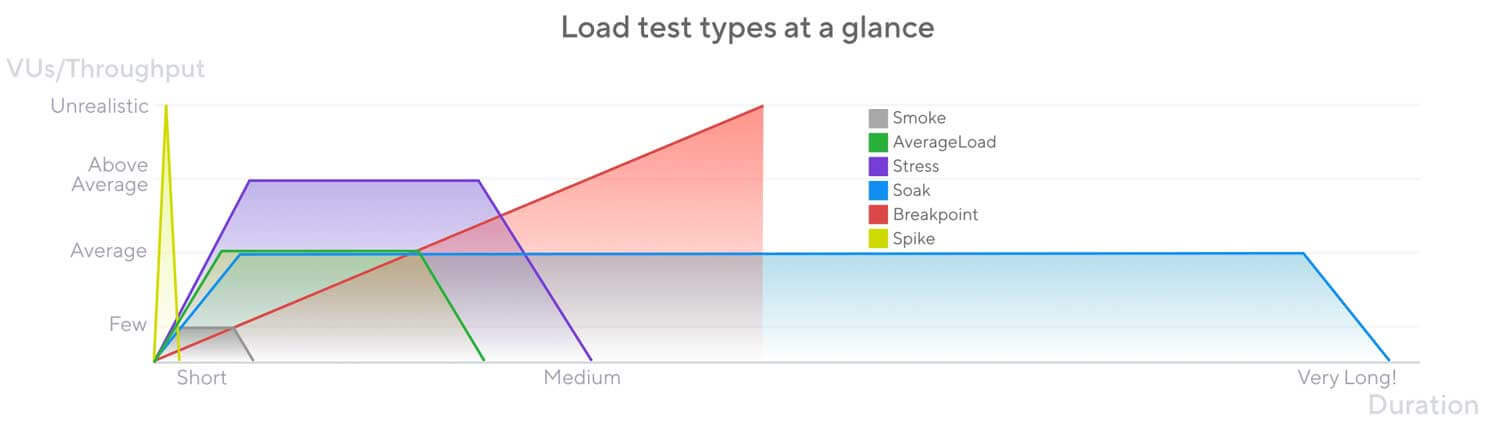
- Load Test - involves gradually increasing the load on a system or application to assess how they behave under expected production overload conditions. The goal is to determine how much load the system or application can handle before performance degradation or failure, such as whether the application still meets minimum performance requirements after an upgrade.
The load test is performed by gradually increasing the number of users or load on an application or system until an overload point is reached (e.g., 5% error rate). - Spike Test - involves rapidly and significantly increasing the load on the system over a short period of time to assess how the system handles sudden peaks in traffic. The goal is to determine whether the system can handle unexpected spikes in traffic, such as promotions or special events.
This can be simulated by suddenly increasing the number of concurrent users or load on the system in a controlled manner to see how the system responds to sudden spikes in traffic.
- Soak Test (sometimes called Endurance Test) - involves maintaining a steady load on a system or application for an extended period to check for memory leaks or other resource problems. The goal is to determine whether the system is stable and does not degrade its performance during long-term operation.
It is carried out by monitoring system resources, such as memory and CPU, to detect any leaks or performance degradation. It is mostly an extension of Load Test. - Stress Test - involves pushing the limits of system performance, introducing failures or excessive load to identify the point at which the system stops performing as expected.
The goal is to determine the limits of system performance, identify weaknesses and assess how the system behaves during unpredictable and extreme conditions.
The results of our completed tests for selected clients:

The first round of optimizations increased the performance of the AleRabat.com platform by 2 to 5 times, depending on the testing scenario. After the latest iteration of tests, the introduction of Redis, and its patches, the platform's performance has increased eight times that of the first tests.

Preparing the festival site for an increase in user visits of as much as 1,500% compared to the 'normal period' while maintaining the site's original performance.

Our measures reduced the homepage's loading time from 8 to 2.4 seconds, increasing the number of realized queries per second from 1,100 to 3,500.

Preparing an application's infrastructure selling Justin Bieber concert tickets to serve 13,000 users per minute while maintaining original performance.

In just two weeks after implementing performance optimization, the number of football club pages registered on the portal doubled from 1,500 in October to 3,000.

Preparation of infrastructure for Cleeng in Amazon Web Services, handling 250,000 requests per hour while maintaining the original, extremely high performance of the service.

Creation of infrastructure and implementation of a nationwide call centre service on Amazon Web Services, capable of handling 2,700 simultaneous calls. The launched infrastructure allowed for servicing up to 50,000 people per hour.
To run a typical performance test you need:
- a test infrastructure on which to run the test without burdening the production servers,
- a test scenario, i.e. the path (or paths) along which users move on the website/application,
- analysis of the platform's behavior during the test and adjustment of the test parameters,
- a report with test results and recommendations,
- sometimes multiple retests after adjustments and even multiple iterations of adjustments.
All these elements we can realize for you
We prepare the test infrastructure (on which we will perform the tests), the testing infrastructure (from which we will generate traffic), as well as the test scenarios. We will also perform the test itself, simulating the specified traffic. We also have a great deal of experience maintaining the platforms on which services and applications are hosted, so you can count on useful information on what to improve, what to change to achieve better results.
Why perform load and performance testing?
- Increase sales by optimizing the performance of your store, service or application!
Performance testing allows you to identify bottlenecks and optimize site performance. Faster loading means lower rejection rates and higher conversion rates. Every second of delay in loading a website or app can reduce conversion rates by up to 7%. - Performance monitoring = lower operating costs
Regular performance testing allows you to proactively manage server resources and optimize your infrastructure. This not only improves the user experience, but also reduces costs associated with maintaining and scaling the system. - Better performance, better SEO
Website loading speed has a direct impact on search engine positioning. With performance testing, we can improve a store's ranking in search results, attracting more organic traffic and potential customers - Scalability and readiness for the future
Performance testing prepares your site for increased traffic, such as during sales or promotions. They ensure that your platform can handle any challenge, regardless of load. - Find and fix hidden bugs before your customers do!
Performance tests allow us to detect problems that may go unnoticed with ordinary testing. They allow us to react quickly to failures and avoid costly downtime. Stay one step ahead of the competition!